

Celebrating Neurodiversity: The Power of Different Thinking
April 23, 2026

Understanding Neurodiversity

Neurodiversity is the idea that there is no single “right” way for the brain to work. It reflects the  natural variation in how people think, learn, process information, and experience the world. This  includes conditions such as ADHD, autism, and dyslexia, which are often described as forms of  neurodivergence


For many years, these differences were viewed primarily through a deficit-based lens. Today, that  perspective is changing. More educators, employers, and mental health professionals recognize  that neurodivergent individuals often bring valuable strengths, creative thinking, and unique  problem-solving abilities


When we move away from trying to “fix” people and instead focus on understanding and  supporting different minds, we create healthier communities, more inclusive workplaces, and  better outcomes for everyone. This is why conversations around neurodiversity and mental  health are more important than ever.


Neurodivergent Strengths as a Competitive Advantage

Different ways of thinking can be a major advantage in education, work, and everyday life. In  fact, many organizations are increasingly recognizing the competitive advantage of  neurodiversity and building more inclusive hiring and leadership practices. 


Neurodivergent individuals may excel in areas such as innovation, pattern recognition, sustained  focus, memory, and attention to detail. When people are placed in environments that support how  they naturally work best, they are often able to perform at a very high level. 


Some common neurodivergent strengths include: 


  •  High productivity: Some neurodivergent individuals thrive in roles that align with their  interests, routines, and preferred working styles. 
  • Complex problem-solving: Many autistic and dyslexic thinkers are especially skilled at  identifying patterns, solving systems-based challenges, and approaching problems from  new angles. 
  • Specialized cognitive skills: Deep focus, technical ability, creativity, and unconventional  thinking are often highly valuable in fast-changing industries. 
  • Attention to detail: Some individuals are especially strong at spotting inconsistencies,  identifying errors, and maintaining quality in detailed work. 
  • Memory and accuracy: Certain neurodivergent people may have strong information  recall and the ability to retain highly specific knowledge. 


These abilities are not simply exceptions — they are often part of what makes neurodiversity  benefits so valuable in leadership, innovation, and team performance.


Why Neurodiversity Matters in the Workplace

The growing conversation around autism in the workplace, ADHD productivity, and inclusive  hiring reflects an important shift: organizations perform better when they include a wider range  of thinkers. 


A neuroinclusive workplace is not about lowering standards. It is about removing unnecessary  barriers so that talented people can do their best work. When employers recognize different  communication styles, sensory needs, and work habits, they often unlock stronger collaboration,  better retention, and more innovation. 


This is one reason why neurodiversity in the workplace is increasingly seen as a business  advantage rather than just a diversity initiative.


Neuroinclusion Strategies That Support Growth

To truly benefit from different ways of thinking, we need to build environments that support  people instead of forcing them to conform. Small changes can have a major impact on both  performance and mental health


Here are a few practical neuroinclusion strategies

  •  Adjust the workspace: Offer quiet areas, flexible seating, or noise-canceling headphones  to support sensory needs. Reducing harsh lighting or excessive noise can help prevent  overstimulation. 
  • Communicate clearly: Use direct, simple language and avoid vague instructions or  overreliance on sarcasm. Clear expectations can reduce confusion and anxiety. 
  • Focus on outcomes: Evaluate work based on results rather than rigid processes. Different  organizational styles and work methods can still lead to excellent outcomes. 
  • Foster inclusion: Create a culture where differences are respected and supported. This  can reduce the pressure to “mask,” or hide neurodivergent traits in order to fit in. 
  • Offer flexibility: Flexible schedules, remote work options, and autonomy can help  individuals manage energy, focus, and productivity more effectively.


These adjustments are not just accommodations — they are often smart, people-centered  strategies that improve the experience and performance of entire teams.


The Value of Different Perspectives

A diverse workforce is a stronger workforce, and a more inclusive society is a healthier one.  When we embrace neurodiversity, we create more opportunities for people to contribute in ways  that reflect their actual strengths. 


Valuing different minds improves not only individual well-being, but also collaboration,  innovation, and long-term success. It moves us away from a culture of conformity and toward a  culture of understanding, adaptability, and excellence. 


As we continue celebrating neurodiversity, the goal should not be to ask everyone to think the  same way. It should be to recognize that some of our greatest ideas, breakthroughs, and  contributions come from people who think differently.


Frequently Asked Questions About

Neurodiversity What is neurodiversity? 

Neurodiversity refers to the natural differences in how human brains function, learn, and process  information. It includes conditions such as ADHD, autism, and dyslexia. 


What are common neurodivergent strengths? 

Common neurodivergent strengths may include creativity, pattern recognition, deep focus,  problem-solving, attention to detail, and specialized technical skills. 


Why is neurodiversity important in the workplace? 

Neurodiversity in the workplace can improve innovation, productivity, inclusion, and team  performance by bringing in different ways of thinking and solving problems. 


How can employers support neurodivergent employees? 

Employers can support neurodivergent employees by offering clear communication, flexible  work options, sensory-friendly environments, and outcome-based performance expectations.


Sources

  • Harvard Business Review (2017). Neurodiversity as a Competitive Advantage
  • Healthy Minds BC (2024). Neurodiversity and Mental Health 
  • Northwestern Medicine (2024). Understanding Neurodiversity
April 22, 2026
Learn simple stress management techniques to reduce daily pressure, build resilience, and support your mental and physical health during Stress Awareness Month and beyond.

March 3, 2026
Social Work Week is a time to recognize the dedication, compassion, and expertise of social workers across Canada — and especially here in Barrie. Every day, social workers make a meaningful difference in the lives of individuals, families, and our wider community.

By Jess Pino February 11, 2026
Mental Health, Valentine’s Day Blues, Comparison Trap, Self-Love, Solo Date Ideas, Loneliness, Galentine's Day, Platonic Relationships, Self-Care, Relationship Pressure, Therapy Blog, Mental Well-being, Social Media Detox.

By bftherapy January 26, 2026
In an era where technology is integrated into almost every aspect of our lives, it is no surprise that many people are turning to AI therapy tools for emotional support. With the rise of sophisticated chatbots and generative models, the idea of a digital therapist available 24/7 has become increasingly appealing. However, as we navigate […]

By bftherapy January 20, 2026
The transition into January often arrives with a quiet but heavy pressure to reinvent ourselves. The calendar flips, and suddenly we are surrounded by messages urging us to become more productive, more disciplined, and more motivated overnight. We are told to hit the ground running with ambitious resolutions at the exact moment when the days […]
By bftherapy November 24, 2025
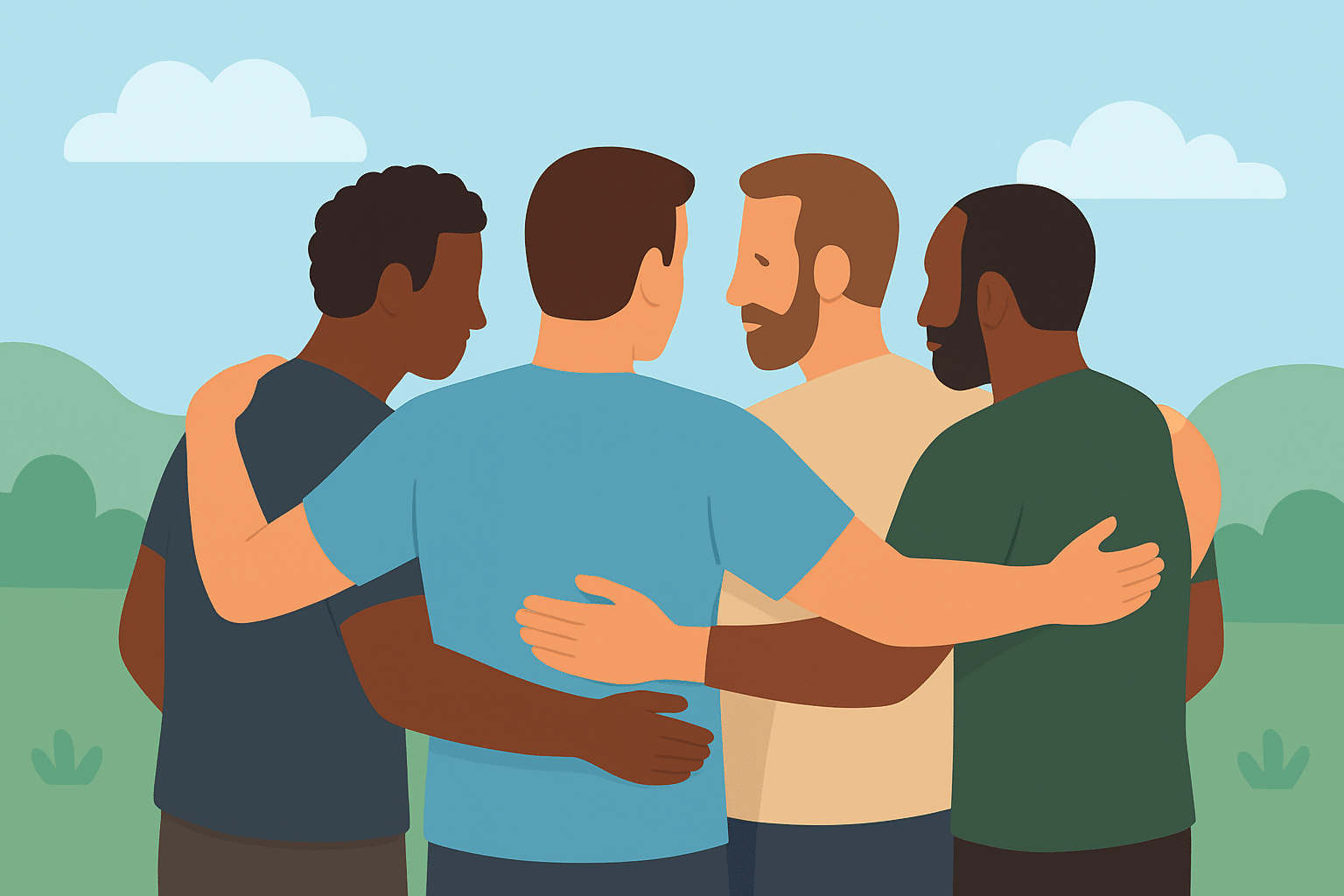
Men’s Emotional Well-Being: Why Deep Male Friendship and Community Matter More Than Ever Men’s emotional well-being has become one of the most urgent and overlooked topics in today’s world. While conversations about mental health have expanded over the last decade, many men are still quietly struggling—often alone. We’ve all heard the statistics about male loneliness, […]

By bftherapy November 14, 2025
The real Movember challenge isn’t just about growing a mustache or raising awareness for men’s health once a year — it’s about rewriting the outdated script that tells men to stay silent in their struggles. For generations, the mantra of “toughing it out” has taught men to suppress emotional pain, ignore mental health challenges, and […]

By bftherapy November 2, 2025
New dads’ mental health is an often-overlooked part of the parenting journey. Becoming a father is a monumental adjustment, and it’s completely normal to feel overwhelmed and to struggle. It’s important to remember that it’s okay to feel this way and, most importantly, it’s a sign of strength to ask for help. While fatherhood is […]

By bftherapy October 15, 2025
The return to school is often presented as an exciting time, but for many teens and young adults, it can amplify feelings of back-to-school anxiety, stress, and overwhelm. It is a period of significant emotional adjustment, and the pressure of new social dynamics, academic expectations, and demanding schedules can feel intense. It is vital for […]

By bftherapy October 8, 2025
Thanksgiving stress often hides behind images of joyful families and shared gratitude, yet what is often unseen is the significant emotional and psychological toll it takes on many individuals. The holiday season can bring an increased level of pressure and emotional exhaustion, and many people feel a certain amount of dread when it comes to […]